
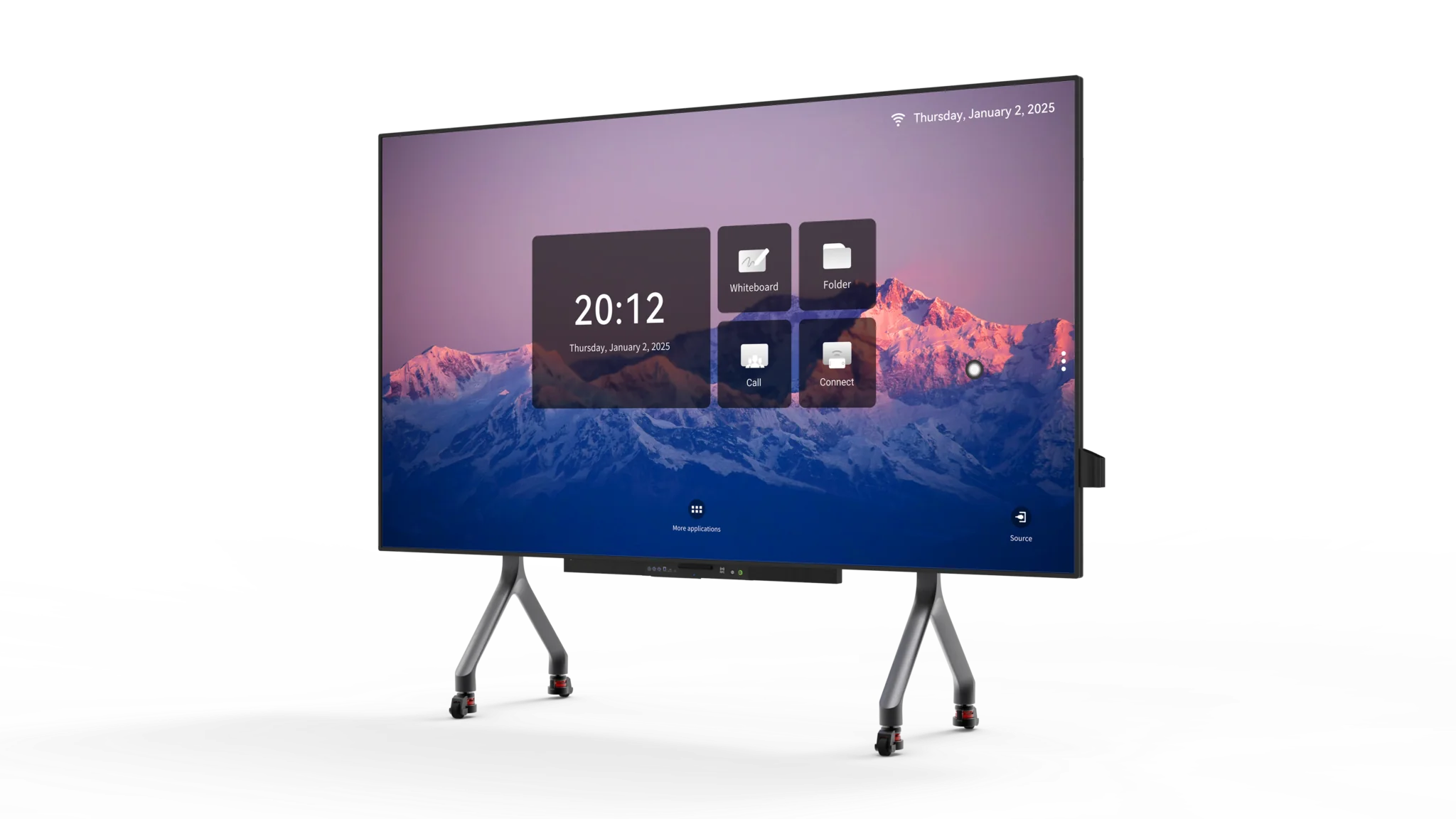
Digital collaboration is moving beyond basic presentation tools, and smart board manufacturers are responding with more flexible operating systems, smarter software, and stronger connectivity. Buyers evaluating conference room smart boards now need to consider how hardware and software work together rather than judging display quality alone. Ledman reflects this direction through dual-system functionality designed around different meeting workflows.
Dual-System Flexibility
Switching between Android 13 and Windows 11 can reduce compatibility issues across different meeting scenarios. This approach gives conference room smart boards greater flexibility when teams move between native applications, office software, video conferencing, and shared content. Such versatility also makes device selection less dependent on one operating environment.
Where AI And Cloud Fit In
Future development among smart board manufacturers is increasingly connected with AI-assisted interaction and cloud services. Automated meeting notes, content recognition, remote collaboration, and centralized device management can reduce repetitive administrative work. Touch performance remains equally important, since accurate writing and responsive gestures influence how naturally participants interact with digital content.
What Buyers Should Evaluate
Technology roadmaps should be judged against actual workplace needs rather than feature counts. Smart board manufacturers offering regular software updates, broad application compatibility, and manageable device administration may provide greater practical value over time. Buyers should also examine camera integration, connectivity, security controls, and service arrangements before selecting equipment.
Conclusion
The next generation of conference room smart boards is becoming more adaptable, software-driven, and connected. Businesses comparing solutions from different smart board manufacturers can therefore look beyond display specifications and assess operating-system flexibility, collaboration features, upgrade paths, and long-term usability. Ledman’s dual-system approach illustrates how this broader technology shift can translate into practical meeting-room functionality.