
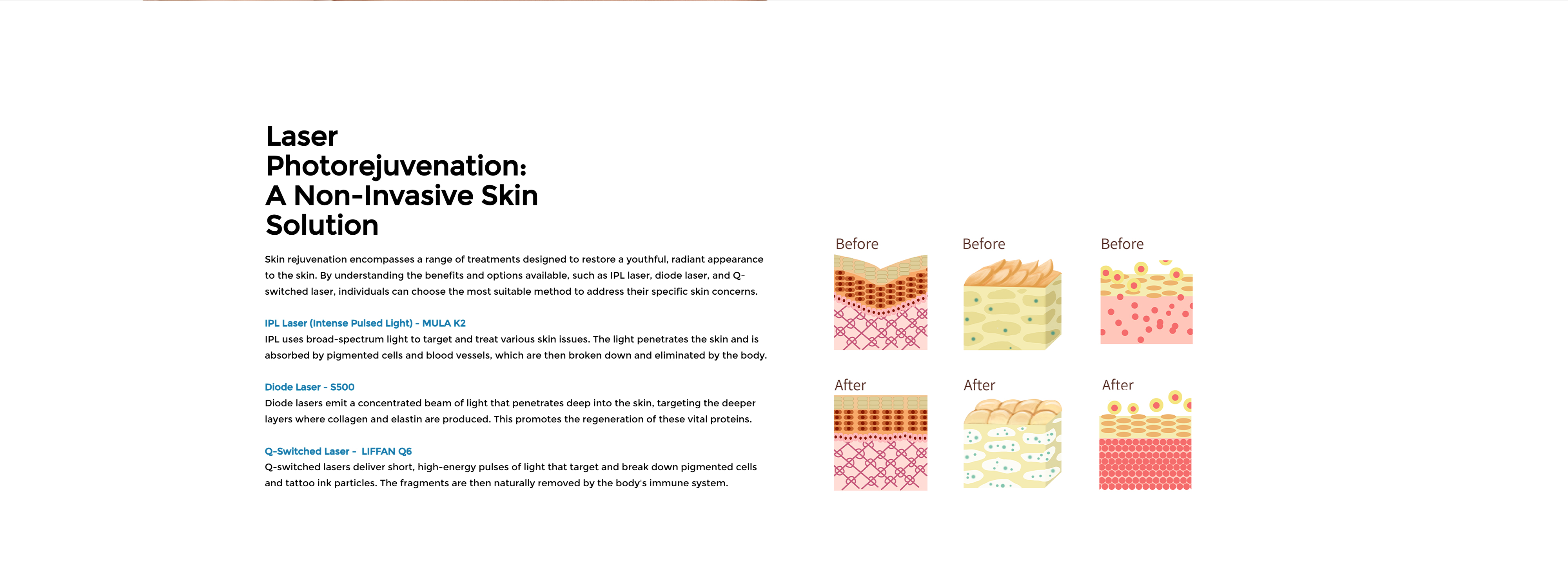
Modern dermatological science favors multi-tiered approaches when addressing complex photoaging manifestations like pigmentary dyschromia, vascular dilation, and structural collagen loss. Structuring a comprehensive skin rejuvenation treatment framework allows clinicians to combine complementary light modalities within organized, multi-phase clinical protocols. Medical equipment developers like ENZOEYS engineer adaptable optical architectures—spanning broad-spectrum pulsed light, semiconductor diodes, and Q-switched devices—that can support sequential treatment planning with different energy-delivery approaches.
Biomechanics of Multi-Depth Photothermal Targeting
Diverse skin layers respond uniquely to distinct light emission wavelengths depending on local chromophore densities. Superficial epidermal structures absorb visible broad-spectrum wavelengths readily, whereas longer near-infrared beams penetrate deeper into dermal collagen matrixes.
In skin rejuvenation treatment, combining distinct energy modalities targets multiple structural layers simultaneously during planned treatment series. Strategic layer targeting stimulates superficial cell renewal while inducing deep thermal contraction, enhancing overall treatment efficiency.
Broad-Spectrum Energy Application for Superficial Tone Uniformity
Intense Pulsed Light systems emit a flexible band of non-coherent wavelengths ideal for clearing superficial lesions. Light energy interacts with melanin and hemoglobin within targeted superficial structures.
Targeted chromophores absorb light energy and undergo controlled photothermal effects, followed by the body’s natural clearance processes. Systems like the MULA K2 BroadBand Light platform utilize broad-spectrum emission to unify surface tone before clinicians introduce targeted deep-layer interventions.
Deep Dermal Matrix Stimulation via Semiconductor Diodes
Diode laser systems can deliver wavelength-specific energy into deeper skin layers for collagen-related rejuvenation applications. Diode platforms emit concentrated light beams that penetrate deeply into mid-dermal layers.
Focused optical absorption generates controlled thermal effects that may support collagen-related remodeling. Integrating specialized units like the SuperTouch S500 helps clinicians boost tissue density and restore structural skin firmness across mature facial contours.
Photoacoustic Fragmentation of Recalcitrant Pigment
High-peak power short-pulse lasers, commonly used in skin rejuvenation treatment, deliver concise nanosecond bursts that fracture stubborn dermal pigments without diffusing heat to surrounding tissue. Rapid acoustic shockwaves fragment dense melanosomes into tiny particles, which local immune cells remove naturally.
Utilizing specialized Q-switched platforms, such as the LIFFAN Q6, targets isolated pigment spots that broad-spectrum light passes might miss. Precise acoustic shockwave generation protects delicate epidermal boundaries, providing a safe option for stubborn hyperpigmentation.
Sequencing Protocol Modalities to Avoid Thermal Accumulation
Executing multi-light therapies safely requires careful sequencing to avoid overlapping thermal loads within tissue boundaries. When multiple modalities are used, treatment sequencing should be determined according to the target tissue, treatment objectives, and the parameters of each device.
Spacing high-fluence laser passes across separate clinical visits allows local tissue to clear cellular debris and recover fully. Appropriate treatment intervals allow clinicians to assess tissue recovery and the response before subsequent procedures. This sequential approach not only protects tissue integrity but also enables clinicians to evaluate intermediate healing responses before committing to more aggressive parameters—providing critical feedback that refines subsequent treatment decisions and reduces guesswork in protocol planning.
Parameter Customization across Varied Fitzpatrick Phototypes
Patient phototypes dictate safe energy boundaries when combining short-pulse and broad-spectrum devices. Darker skin tones contain higher native melanin concentrations, so treatment parameters should be selected carefully according to skin type and the specific treatment objective.
Deploying a customized skin rejuvenation therapy protocol involves fine-tuning sub-pulse delays and active surface cooling parameters carefully. Tailoring device parameters allows clinicians to balance energy delivery with the treatment requirements of the target tissue.
Patient Consultation and Expectation Management
Detailed baseline evaluations help clinicians assess skin laxity, pigment depth, and vascular involvement before designing multi-session treatment plans. Educating patients on how complementary modalities work together builds trust and improves protocol adherence.
Setting realistic timelines helps clients understand why multi-pass or multi-session approaches require patience. Explaining the gradual nature of collagen remodeling helps manage expectations, ensuring high client satisfaction throughout extended care protocols.
During consultations, clinicians should also calibrate patient expectations around visible milestones—clarifying which improvements to anticipate after the first session versus those that only emerge after the full series—to prevent premature disappointment or treatment abandonment. When patients understand that tissue remodeling unfolds over weeks to months, they become active partners in the process rather than passive recipients, reducing the likelihood of dissatisfaction during the natural plateau phases that occur between sessions.
Capital Equipment Integration and Facility Workflows
Equipping medical aesthetic facilities with versatile, complementary light technologies enhances daily room utility and broadens treatment menus. Combining BBL, diode, and Q-switched units allows practices to address diverse patient concerns efficiently within unified scheduling workflows.
Utilizing adaptable platforms like the MULA K2, SuperTouch S500, and LIFFAN Q6 gives practices access to different light-based treatment modalities for varied clinical applications. Diverse device availability empowers clinicians to create customized care plans while maintaining steady appointment throughput.
Conclusion
Combining complementary light technologies enables modern clinics to address multi-layer skin aging concerns safely and systematically. Integrating broad-spectrum light, diode lasers, and nanosecond Q-switched devices balances superficial tone correction with deep collagen renewal. Hardware solutions manufactured by ENZOEYS demonstrate how flexible optical platforms support safe, repeatable clinical execution, advancing overall skin rejuvenation therapy standards across expanding aesthetic practices.