
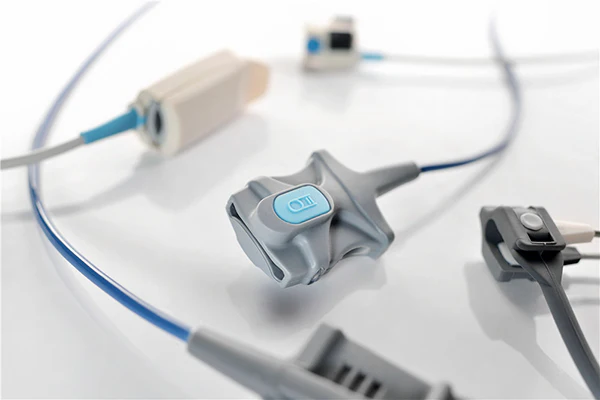
When clinicians monitor blood oxygen saturation with a Masimo SpO2 sensor, consistent SpO2 readings depend on more than correct placement. SpO2 sensors rely on optical sensing, meaning the device must distinguish the red and infrared signals coming from the patient from background light and ambient interference. For facilities using disposable SpO2 sensor options, the role of light shielding becomes even more important because each sensor is a single-use component that must be dependable from the first connection to the end of use. Unimed supplies compatible SpO2 solutions designed for broad monitor integration, supporting consistent monitoring workflows.
How Light Shielding Protects Signal Integrity
Compatible SpO2 sensors measure pulse-related light changes that reflect blood volume variations. If external light reaches the photodetector, it can introduce noise and distort the pulse waveform. Proper light shielding reduces stray illumination and helps maintain stable signal transmission, especially in busy clinical settings with strong overhead lighting, reflective surfaces, or patient movement near the sensor site.
In a Masimo SpO2 sensor application, stable optical detection helps preserve waveform quality and supports reliable SpO2 computation. This is particularly relevant when the sensor is used on different patient sizes, from neonate to adult, since each sensor fit and optical path can affect how easily ambient light influences detection.
Why Disposable SpO2 Sensors Need Consistent Shielding
Disposable SpO2 sensor products are designed for fast replacement and simplified infection control, including fingertip, toe, thumb, hand, or foot applications. Even though these sensors are single-use, they still must provide predictable shielding performance from start to finish. Variations in sensor materials, housing design, and light-blocking layers can influence how effectively the sensor rejects ambient interference.
Unimed’s catalog includes both SpO2 interface cable options and SpO2 sensor selections used with major monitor platforms, helping ensure users can maintain a consistent sensor-to-monitor setup across shifts.
Conclusion
Proper light shielding is a practical requirement for compatible SpO2 sensors because it protects optical signal quality from environmental interference. For users relying on a Masimo SpO2 sensor or choosing a disposable SpO2 sensor, strong shielding supports stable pulse detection and more dependable SpO2 monitoring. With Unimed SpO2 sensors and interface solutions, teams can support consistent optical sensing integration across common clinical monitor configurations.