
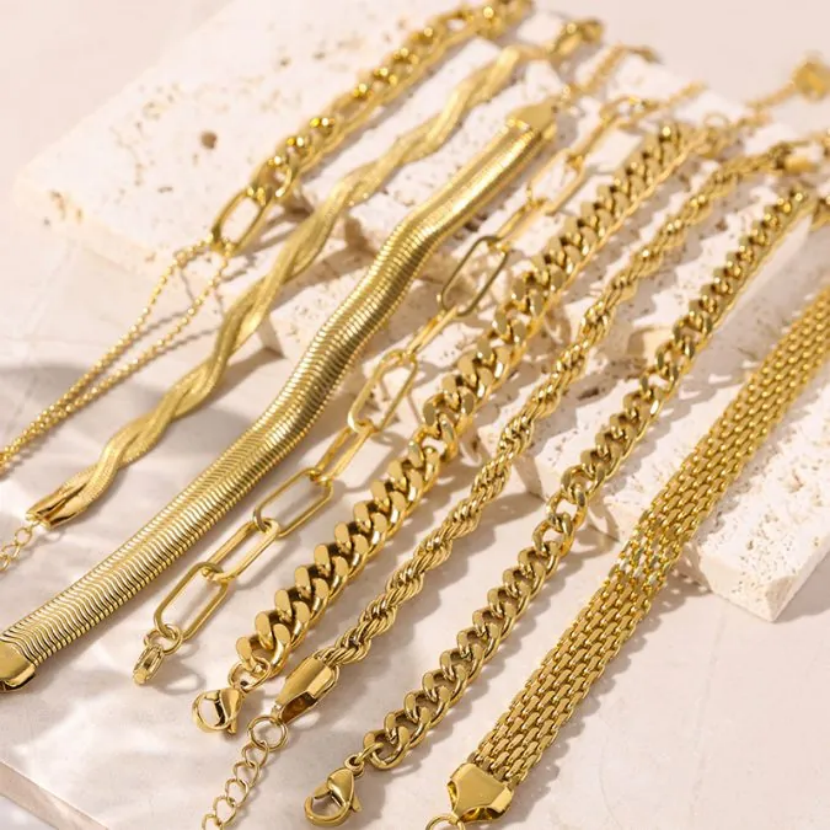
For emerging and established fashion brands alike, controlling production costs without sacrificing quality remains a persistent challenge. Many jewelry companies piece together services—design here, casting there, plating elsewhere—each step adding markup, communication delays, and quality variance. That is where vertical integration transforms the equation. When a manufacturer controls multiple stages of production in‑house, from alloy refining to final polishing, the savings cascade directly to the brand. For businesses engaged in private label jewelry manufacturing, partnering with vertically integrated private label jewelry suppliers can reduce per‑unit costs, shorten lead times, and improve consistency—all while maintaining compliance with international standards.
Eliminating Middleman Markups Across the Supply Chain
Traditional fragmented production involves separate fees for casting, soldering, plating, and packaging. Each subcontractor adds a profit margin. A vertically integrated operation consolidates these steps under one roof, removing those layered markups. For private label jewelry manufacturing, this means lower base costs without negotiating with multiple vendors. Integrated private label jewelry suppliers also reduce shipping expenses between facilities and cut coordination overhead. The result is a final price that reflects true production cost—not a chain of intermediaries.
Lower Minimums and Reduced Trial Risk Through Flexible MOQ
Vertical integration also enables more flexible minimum order quantities because the factory controls its own scheduling and tooling. One leading integrated supplier offers brass jewelry MOQ at just 200 pieces and stainless steel at 300 pieces, with multiple styles allowed in a mixed order. For brands testing new designs, this flexibility reduces first‑batch trial order costs by 58% and lowers unsalable inventory risk by 42%. Such terms are rare among non‑integrated private label jewelry suppliers, who often require higher minimums to coordinate external partners. Vertical integration directly supports lean inventory strategies.
Certification Compliance Without Extra Fees
Another hidden cost in non‑integrated models is certification. Each subcontractor may need separate testing, driving up expenses. Vertically integrated private label jewelry manufacturing partners conduct in‑house quality control and provide complete certification documents—CE, CPSC, and Amazon/Walmart compliance—with every batch. A 100% qualification review pass rate means no surprise rejection fees or delayed shipments. Brands avoid the costly cycle of retesting and rework, keeping production on schedule and on budget.
A Vertically Integrated Partner for Cost‑Effective Branding
Vertical alignment directly lowers the total cost of private label jewelry manufacturing while improving quality assurance. Star Harvest exemplifies this approach, offering complete certification qualifications (CE, CPSC, Amazon/Walmart compliant) with a 100% pass rate, plus flexible MOQ of 200 brass or 300 stainless steel pieces with mixed styles. First trial orders see cost reductions of 58% and unsalable risk reduced by 42%. As a vertically integrated provider among private label jewelry suppliers, Star Harvest helps brands launch confidently, knowing every batch meets global marketplace standards at a truly competitive cost.